
You know how to keep it together.
The house is clean. The bills are paid. You show up to work, crack a few jokes, maybe even hit the gym. On paper? You look solid.
But here’s the part no one sees:
The drink before dinner turned into two before lunch.
The pills help you sleep—but now you can’t without them.
And you’re starting to wonder how long you can keep pretending everything’s fine.
If that sounds like you, let’s talk. Because the voice in your head saying “I don’t need detox”? That voice might be lying to you—and you know it.
High-Functioning Addiction Doesn’t Cancel Out Withdrawal
Here’s the dangerous myth a lot of high-achievers buy into:
“If I can still manage my life, I must not be addicted.”
But withdrawal doesn’t care about your job title. Or your perfect attendance. Or how clean your kitchen is. If your body has adapted to the presence of alcohol, benzos, opioids, or another substance—quitting cold turkey can be dangerous.
You don’t have to be falling apart for detox to be necessary. You just have to be dependent. And if you’re reading this, you probably already know you are.
???? Learn how we coordinate medical detox referrals with trusted referral partners.
Denial Doesn’t Always Look Loud. Sometimes, It Looks Like “I’ve Got This”
Denial isn’t always dramatic.
It doesn’t always shout. Sometimes, it whispers just loud enough to stall change.
You might not be the guy shouting at bartenders or the woman missing school pickups. You might be the calm one, the overfunctioner, the person everyone else leans on. That doesn’t mean you’re fine.
If you’re rationalizing, “I’ll cut back next month,” or “It’s not that bad,” you’re not alone. But we’ll be blunt: the people who resist detox the most are often the ones who need it the worst.
The Exhaustion You Feel Isn’t Normal—It’s the Hidden Cost of Keeping It Together
Being “functional” while addicted isn’t a flex.
It’s a full-time job with no vacation, no real rest, and a mounting emotional toll.
There’s no room for collapse—so you hold yourself up with substance and shame. And maybe you’ve gotten so used to feeling anxious, sick, foggy, or low-key terrified of running out of what you “need” that you forgot it could be different.
This isn’t sustainable. But the good news? You don’t have to let it get worse before it gets better.
Detox Isn’t a Failure—It’s a Medical Need
Here’s what people get wrong about detox:
It’s not punishment. It’s not weakness. It’s not a rehab cliché.
It’s medical care for a physical condition—a safe, structured way to help your body and brain stabilize after quitting a substance it’s become dependent on.
Ascend North Carolina provides outpatient care and helps coordinate medical detox referrals with trusted referral partners. Detox at a licensed facility outside Ascend may include:
- Medications to ease withdrawal symptoms and reduce risk
- A private, respectful, and supportive environment
- A clear bridge to the next step in your recovery
If the idea of going to detox terrifies you—it’s okay. That fear probably means you need it.
“Cutting Back” Isn’t a Detox Plan. It’s a Delay Tactic.
We hear it all the time:
“I’m going to wean off myself.”
“I just need a few days to get it together.”
“I’ll start fresh after this project / trip / holiday.”
And then months pass. Your tolerance creeps higher. Your anxiety spikes if you can’t access your substance. And eventually, your body stops playing along. You feel sick, panicked, shaky—even when you’re trying to slow down.
Tapering can be deadly with some substances. That’s not a scare tactic—it’s reality. Withdrawal from alcohol and benzodiazepines can cause seizures or worse without medical oversight.
Don’t gamble with your body. Get help from people who actually know what they’re doing.
Charlotte Needs to Talk About This More
This isn’t just happening somewhere else.
It’s happening in high-rises and cul-de-sacs across Charlotte. In PTA meetings, ER break rooms, boardrooms, and back patios.
High-functioning addiction is rampant. But it thrives in silence.
At Ascend, we meet people where they are. No shame. No judgment. Just support that understands what it means to be holding everything together—while falling apart on the inside.
You don’t have to crash to qualify. You just have to be tired of pretending.
How Does Ascend North Carolina Help Coordinate Detox Referrals?
If you’re worried about getting help, here’s what a referral to an outside detox provider actually involves:
- Step 1: Confidential Conversation You’ll speak with our team about your substance use and support needs. Totally private.
- Step 2: Detox Referral We help coordinate a referral to a licensed detox provider outside Ascend, where the provider determines your detox plan.
- Step 3: Planning Outpatient Care After detox with an outside provider, we help you plan outpatient care or coordinate referrals for other support.
Asking for help doesn’t have to be dramatic. It can be a real first step. Here’s how to ask about a referral. →
FAQ: Medical Detox Referrals for High-Functioning Individuals
What’s the difference between a medical detox and just stopping on my own?
Medical detox is supervised by professionals who manage symptoms, prevent complications, and ensure safety. Detoxing on your own can be dangerous—especially with alcohol, benzos, or opioids.
I’m scared I’ll lose my job or reputation. Is detox confidential?
Absolutely. Ascend North Carolina maintains strict confidentiality. We can help coordinate a confidential detox referral to an outside provider and discuss outpatient care that fits your life.
What if I’m not “that bad”? Can I still ask for help?
Yes. If you’re asking that question, it’s probably time. You don’t need to justify your pain or hit some invisible bottom. You just have to want a different way forward.
How long does detox take?
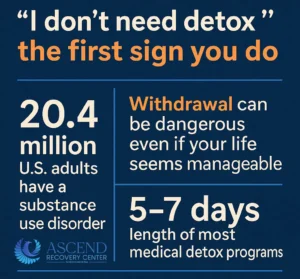
Most detoxes last 5–7 days, depending on the substance and your unique needs. The outside detox provider will explain what to expect after assessing your needs.
What happens after detox?
After detox at an outside facility, we help you map your next steps, whether you need a referral for residential treatment, outpatient care through IOP, or other support.
This Isn’t a Breakdown. It’s a Breakthrough Waiting to Happen.
You’ve handled everything else. But you don’t have to handle this alone.
Whether you’re drinking to sleep, using to function, or spiraling quietly behind a calm face—your pain is real. And it deserves real support.
???? Call (844) 628-9997 or visit Ascend’s detox referral information to discuss detox referrals with trusted referral partners and outpatient care at Ascend Charlotte.
Insurance verification is available
Ascend is in network with BCBS, UnitedHealthcare/Optum, Curative and TRICARE East.