


There’s something no one really tells you about healing: after the crisis, after the early wins, after the biggest storms have passed—you can still feel hollow.
Maybe you’re years out from treatment. Life is stable. You’re doing the things you’re supposed to. You’ve checked a lot of boxes. But some days feel flat. Some nights are lonely. And there’s a part of you quietly wondering… Is this all it’s supposed to be?
If you’ve been through mental health treatment at Ascend in Charlotte, you’re still part of something bigger. You haven’t outgrown support. You haven’t lost your place here. And you’re not the only one feeling this way.
Because this isn’t just about managing symptoms—it’s about staying connected to the people and practices that helped you rebuild. And connection doesn’t expire.
The Quiet Disconnect No One Talks About
When you were deep in the work of treatment, everything was intense. Every insight mattered. Every coping skill felt like a lifeline. You probably had a team, a rhythm, maybe even a sense of community that gave you purpose.
Now? You might be healthy—but not quite whole.
It’s a hard thing to name. You’re not in crisis. You’re still showing up for work, family, life. From the outside, you look like success.
But inside, maybe you feel… off. Like your world got quieter, but not calmer. Like you’re floating between who you used to be and who you’re still trying to become.
This isn’t failure. It’s a normal—if rarely talked about—phase of long-term recovery.
Stability Isn’t the Same as Fulfillment
Let’s say it plainly: being okay isn’t the same as being alive.
You can be doing all the “right” things and still feel disconnected from joy, meaning, or momentum. That’s not a sign you’ve backslid. It’s a signal that it might be time to re-engage—not because you’re broken, but because you’re ready for more.
Mental health treatment helps people stabilize. But it also offers something just as important: renewal.
Sometimes we need to return—not to the same intensity, but to the community, structure, and depth that brought us back to life in the first place.
Treatment Wasn’t Just a Chapter—It Was a Community
Think back to when you first entered treatment. Whether it was a group room, a therapy session, or your first intake call—you probably didn’t walk in feeling confident.
But somewhere in that experience, you found moments of clarity. Maybe even connection. You heard someone say something that felt eerily familiar. You felt seen by a clinician who didn’t talk down to you. You had space to breathe, to break, to rebuild.
Those moments created more than coping skills—they created roots.
And those roots? They’re still there. That therapist? Might still be at Ascend. That group you used to open up in? Might still be meeting. That sense of “I’m not the only one”? Still waiting for you.
Coming Back Doesn’t Mean Starting Over
A lot of alumni hesitate to reconnect because they’re afraid it will feel like a step backward. As if returning to care means undoing all the progress they’ve made.
But revisiting support doesn’t mean you’ve failed. It means you’ve grown enough to recognize when you need more depth, more connection, more alignment.
Just like going to the gym after a break isn’t starting over—it’s reengaging the muscles you’ve already built. Therapy, support groups, check-ins—they’re all tools. You don’t lose them. You just get to choose when and how to use them again.
The “Flatline” Phase Is Real—and Treatable
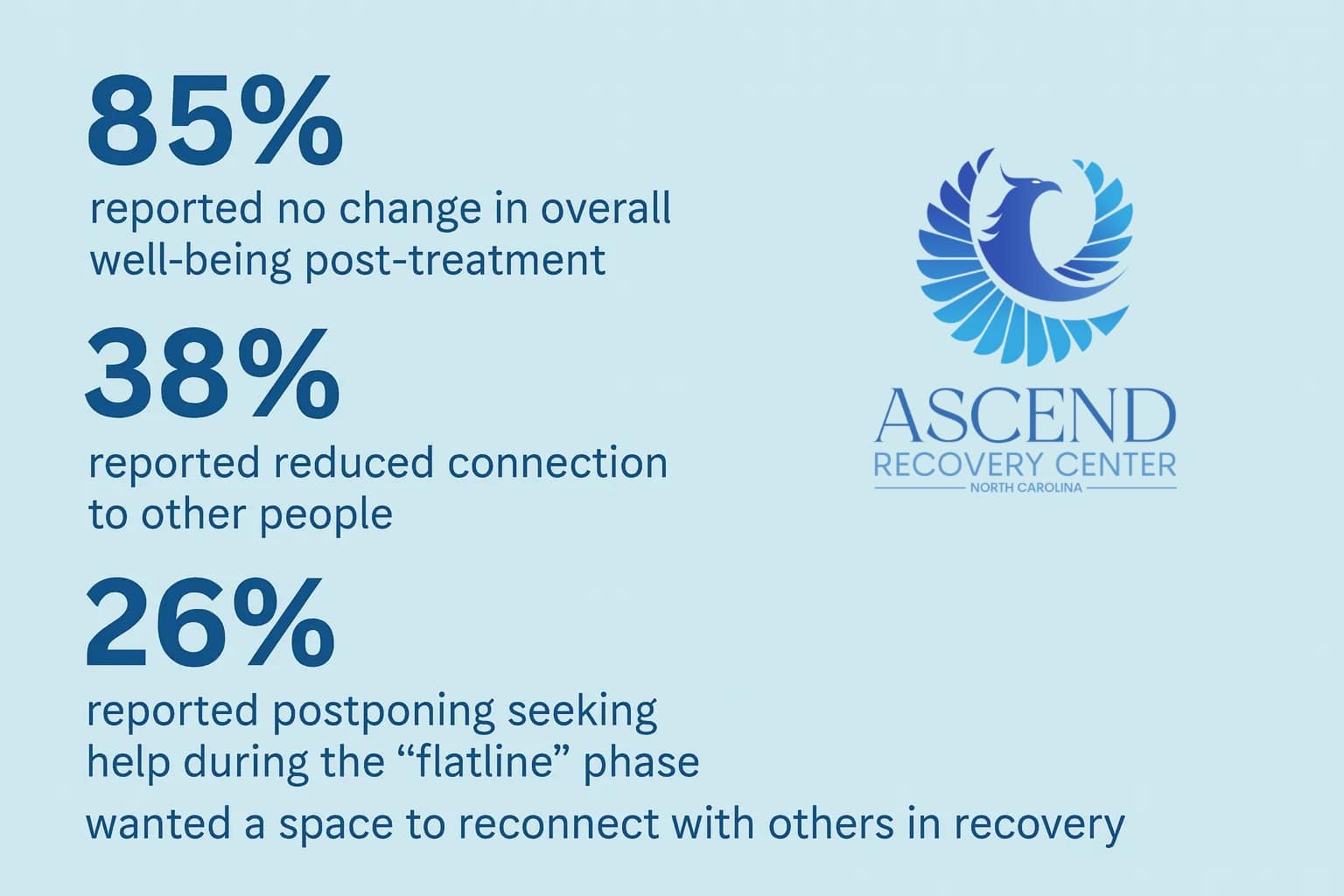
One of the hardest emotional phases of long-term recovery is what some call the “flatline.” You’ve escaped the worst of the darkness, but the light hasn’t fully returned.
You might feel numb. Like life is happening in grayscale. Like you’ve stopped growing, but can’t explain why.
This is the phase where many people stop reaching out. They feel like it’s “not bad enough” to ask for help.
But here’s the thing: this is exactly when treatment can help the most. You don’t need a breakdown to benefit from support. You just need honesty—and the willingness to reawaken parts of yourself that may have gone dormant.
Reconnection Can Be the Catalyst
At Ascend North Carolina, we’ve seen it time and time again: an alumni walks through our doors—not in crisis, but in quiet confusion. A little lost. A little unsure. And they leave the session lighter, more present, a little more alive.
Sometimes all it takes is one honest conversation. Other times it’s a few sessions to reset or a new group to feel less alone again.
Whatever reconnection looks like for you, know this: there’s still a place for you here.
You helped build this community by showing up when you needed help. That door didn’t close. That seat isn’t filled. It’s still yours.
Visit our mental health treatment page in Charlotte and see how Ascend supports alumni who want more than just “fine.”
FAQs for Long-Term Alumni Considering Reconnection
What if I’m not in crisis, just feeling flat or distant?
That’s exactly why this kind of support exists. You don’t have to wait for things to get bad. Many alumni come back during times of low motivation, emotional distance, or just to “check in” with themselves.
Will I have to re-explain my whole history?
Not necessarily. If you worked with us before, we likely have context. And if you’re starting fresh, we’ll meet you where you are now—without dragging you through every detail of the past unless it’s helpful to you.
Can I choose what kind of support I return to?
Absolutely. Whether you want a one-time session, to rejoin group therapy, or explore something new, we’ll collaborate with you on what makes sense. You set the pace.
What if I’m embarrassed to reach back out?
You’re not alone in feeling that. Many alumni share that worry—and almost all of them feel immediate relief after that first call or message. The team at Ascend is here to welcome, not judge.
How do I know if it’s “time” to reconnect?
If you’ve been asking yourself this question, that’s often the sign. A little curiosity, a little restlessness, a quiet tug—that’s your signal. You don’t have to be sure. You just have to be open.
Do you offer anything specifically for alumni?
Yes. We offer flexible options for former clients, including brief engagement sessions, alumni resources, and referrals if your needs have changed. We’re also working to expand long-term support programming as our alumni network grows.
Still Here. Still Yours.
Healing didn’t end when treatment did. And neither did your access to support, community, or growth.
If you’ve been feeling disconnected—emotionally, socially, spiritually—maybe it’s time to come back. Not because you’re broken, but because you’re still becoming.
Call (844) 628-9997 or visit our mental health treatment services page in Charlotte to reconnect. We’re still here. And we still see you.