


When you first hear the word medication in the context of alcohol addiction treatment, it can land like a gut punch.
“Is it that serious?”
“Does this mean I’ve failed?”
“Am I just trading one addiction for another?”
If those questions are bubbling up, you’re not overreacting. You’re human—and scared. Most people don’t expect to find themselves here, staring at a prescription pad after being told they have an alcohol use disorder. The stigma is heavy. The shame? Even heavier.
At Ascend North Carolina, we see this every day. And our first message to you is this: you’re not broken, and you’re not alone. Medication doesn’t mean you’re a worst-case scenario. In fact, it might mean you’re finally getting the support your brain and body have been asking for.
This isn’t about surrendering your strength. It’s about giving yourself the best chance to heal.
Let’s walk through what that actually looks like—and why medication might be the most compassionate step you take.
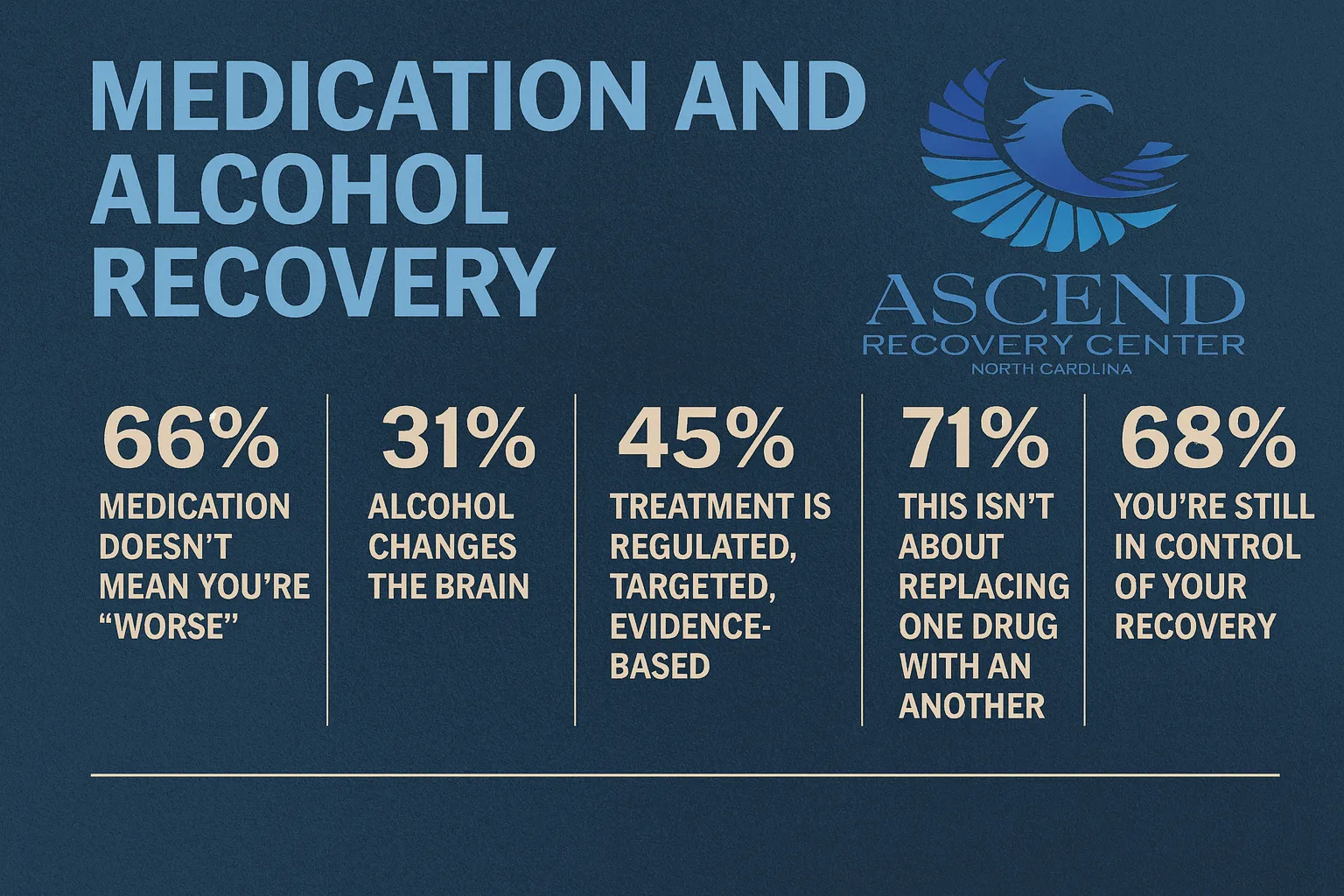
Medication Doesn’t Mean You’re “Worse” Than Anyone Else
There’s this cultural script that says, “If I need meds, it must mean I’m really bad off.”
We want to rewrite that script.
Needing medication doesn’t make your addiction more real than someone else’s. It doesn’t mean you’re lazy, incapable, or weak. It means your brain has been through a lot, and now it needs some medical support while it recalibrates.
This is no different than someone with diabetes needing insulin or someone with anxiety needing an SSRI. It’s not about moral failure—it’s about function, safety, and recovery.
Why Alcohol Addiction Changes the Brain
Alcohol alters the chemistry of your brain over time. That’s not philosophy—it’s neuroscience.
Specifically, alcohol affects:
- GABA and glutamate systems (which regulate calm vs. excitability)
- Dopamine and serotonin levels (which shape motivation, pleasure, and mood)
- The prefrontal cortex (which handles decision-making and impulse control)
When you stop drinking, your brain doesn’t immediately snap back into balance. Instead, many people experience intense cravings, emotional volatility, anxiety, depression, or even physical discomfort.
Medication doesn’t erase this reality—but it can ease it. That space—between suffering and clarity—is where real recovery starts.
What Types of Medication Are Actually Used?
Medication in alcohol addiction treatment isn’t about sedation or dependency. It’s targeted. Regulated. Evidence-based.
Here are three of the most common types:
- Naltrexone (Vivitrol, Revia)
This medication blocks the euphoric effects of alcohol and significantly reduces cravings. It doesn’t make you sick—it just makes drinking feel less rewarding. Over time, this re-trains the brain’s attachment to alcohol. - Acamprosate (Campral)
Often used post-detox, acamprosate helps restore brain balance disrupted by chronic alcohol use. It reduces anxiety, restlessness, and emotional dysregulation. - Disulfiram (Antabuse)
Creates unpleasant physical effects if alcohol is consumed, such as nausea, flushing, and heart palpitations. It’s ideal for those who want a physical deterrent to relapse.
None of these are addictive. None make you “high.” They’re simply tools—temporary scaffolding for your brain while it learns to stand on its own again.
This Isn’t About Replacing One Drug with Another
We hear this worry a lot: “Aren’t I just trading one substance for another?”
It’s a valid question. Here’s the difference:
- Alcohol addiction fuels compulsive behavior and harm.
- Treatment medications are non-addictive and used under clinical supervision to reduce harm.
In other words, alcohol narrows your world. Medication helps open it back up.
You’re Still in Control of Your Recovery
Here’s what medication doesn’t do:
- It doesn’t make decisions for you.
- It doesn’t remove your agency.
- It doesn’t take over your life.
You’re not being handed a bottle and told to follow orders. At Ascend, every medication decision is made with you, not for you.
We take time to:
- Walk you through your options
- Listen to your concerns
- Adjust based on your experience
- Honor your right to say “no” or “not yet”
Recovery isn’t rigid. It’s collaborative.
It’s Okay to Be Scared—We Expect That
Many newly diagnosed clients share the same fears:
- “What if it doesn’t work?”
- “What if I feel numb?”
- “What if people judge me for taking meds?”
These aren’t just logistical fears. They’re deeply personal.
And we don’t try to “fix” those emotions. We hold them with you. We answer your questions without judgment. We give you space to grieve the version of yourself you thought you had to be.
Fear isn’t a barrier to recovery. It’s often the first sign that you’re ready for something better.
Medication Doesn’t Replace Therapy or Support—It Supports It
You still need therapy. You still need community. You still need structure.
But medication can make those things more accessible.
Imagine trying to do emotional work when you’re white-knuckling through cravings, barely sleeping, or bouncing between panic and numbness. Now imagine having just enough internal steadiness to actually focus, listen, and reflect.
That’s the difference medication can make.
It’s not the whole solution. But it can be the difference between drowning in fear and being able to swim toward hope.
This Isn’t Forever—Unless It Helps
Some people only use medication short-term—for the first few months of recovery. Others find longer-term support helpful, especially if they have co-occurring conditions like anxiety or depression.
Either way, there’s no shame in needing long-term care. And there’s no pressure to commit to anything before you’re ready.
Recovery happens in seasons. And medication, like any other tool, can be adapted as those seasons shift.
FAQs About Medication in Alcohol Addiction Treatment
Will medication change who I am?
No. In fact, many people say it helps them find who they are—once they’re no longer caught in survival mode.
Is it possible to recover without medication?
Yes, for some people. But if you’re struggling with intense cravings or emotional overwhelm, medication might be the thing that makes recovery doable instead of excruciating.
What if I already feel ashamed?
That’s normal. Many people carry shame around needing help. But medication doesn’t mean you failed—it means you care enough to give yourself a better shot.
Can I talk to someone before deciding?
Yes. At Ascend, we offer compassionate consultations to walk you through options without pressure.
Will I be judged by others in recovery?
There’s a growing movement in recovery communities that recognizes medication as part of a valid, life-saving pathway. You deserve support—not stigma.
One Final Truth: You Deserve to Feel Safe in Your Recovery
Medication isn’t about giving up. It’s about giving your brain and body the best shot at healing.
And if you’re reading this with your heart pounding and your palms sweaty, wondering if you’re the exception—the person who can’t be helped—know this:
You’re not the exception. You’re exactly who this was written for.
You don’t have to decide everything today. You just have to take the next small step toward something better. And if medication is part of that path, we’ll walk it with you—with compassion, clarity, and care.
Still have questions? We’re here to listen, not pressure.
Call (844) 628-9997 to learn more about our alcohol addiction treatment services in Charlotte, North Carolina.